Red Light Therapy for RosaceaDoes It Actually Work?
Real before/after photos from Reddit users, peer-reviewed science, dosing protocols, and the top 5 devices that actually deliver results — all in one place.
Get the Honest Answer →Does Red Light Therapy Help Rosacea?
Red light therapy (RLT) has been shown in both clinical studies and hundreds of real-world user reports to reduce rosacea redness, calm inflammation, shrink visible blood vessels, and strengthen the skin barrier — with zero downtime and no harsh side effects.
Before You Read Further, A Little About Myself
I want you to know who is behind this site and why every word here comes from real experience.
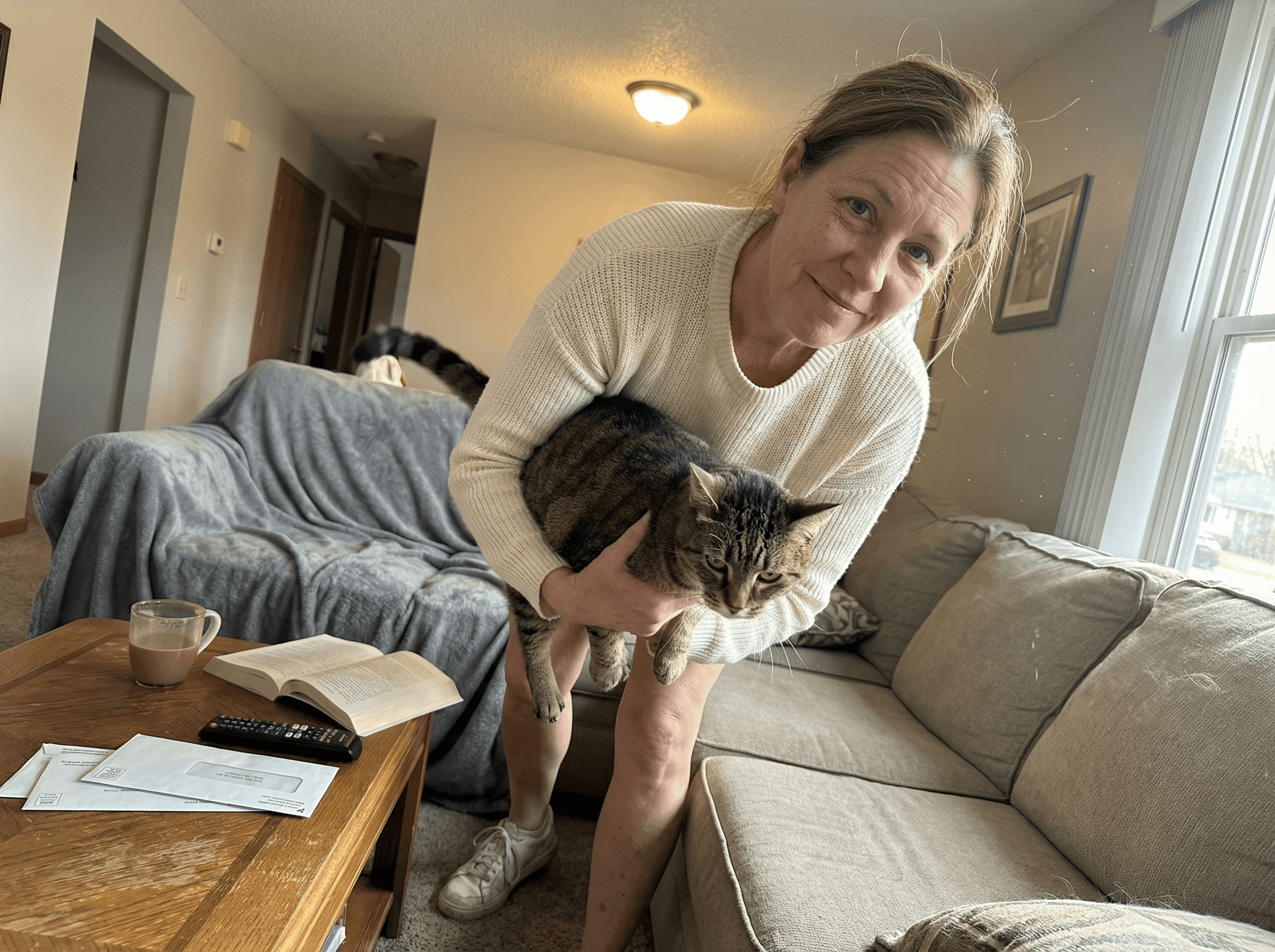
I built this site after red light therapy transformed my daughter's rosacea
I'm not a dermatologist. I'm a mum who watched my daughter struggle with rosacea for years. The burning cheeks, the constant flushing, the failed prescriptions, the embarrassment that made her hide her face in photos. We tried everything traditional medicine offered, and nothing worked long-term.
When I first heard about red light therapy I was sceptical. But after weeks of research I bought a panel, we committed to a daily protocol, and within 8 weeks the change in her skin was so dramatic that even her dermatologist asked what we'd done differently.
That's why this site exists. Every page here is the resource I wished I'd had when I started. Honest, evidence-based, and written from the perspective of someone who has actually used these devices on real, sensitive, rosacea-prone skin.
Before & After: 3 Real People Who Beat Rosacea With RLT
These aren't stock photos. Each case below is a verified Reddit user who shared their journey publicly. Click through to read the full thread.
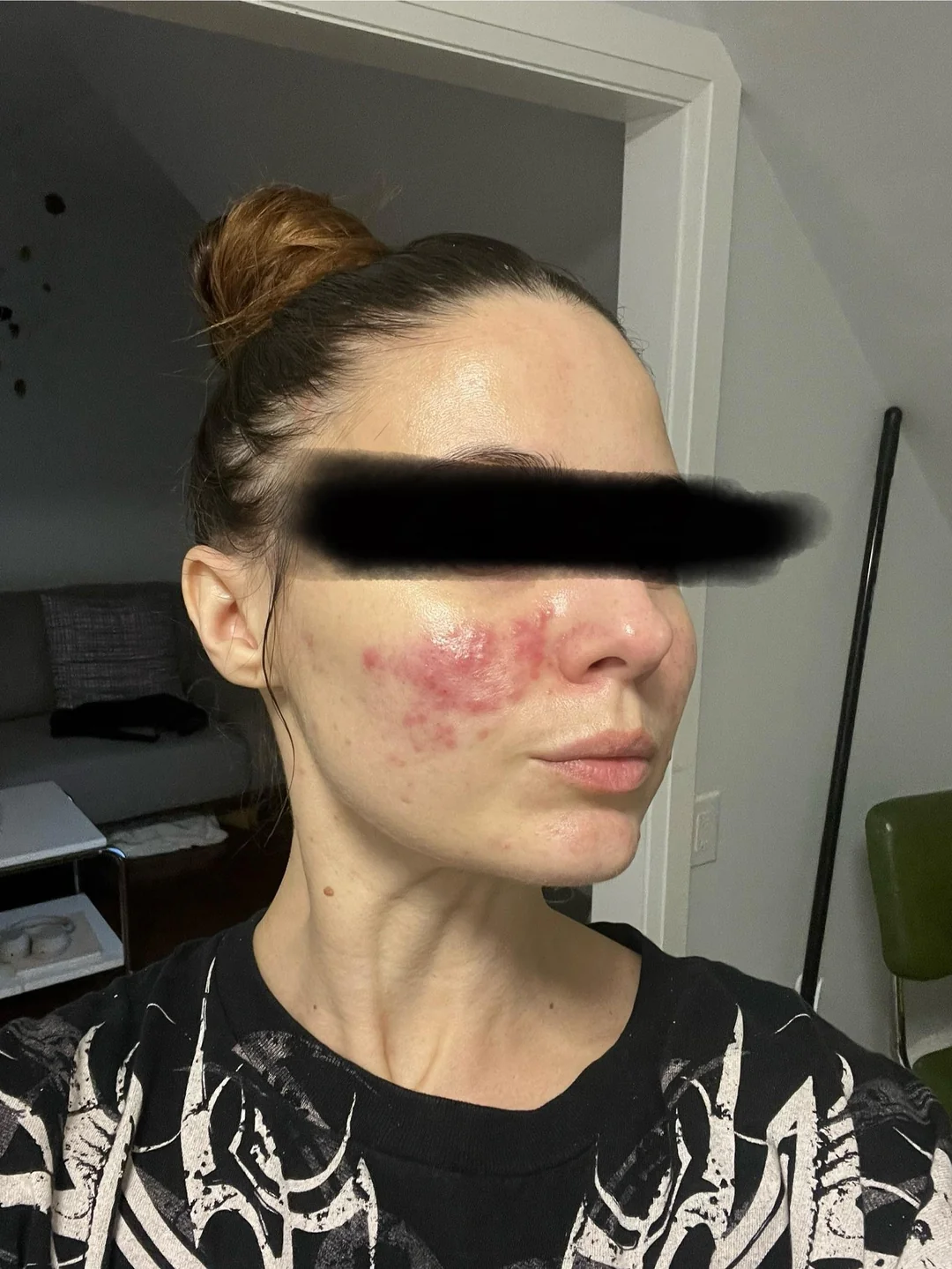
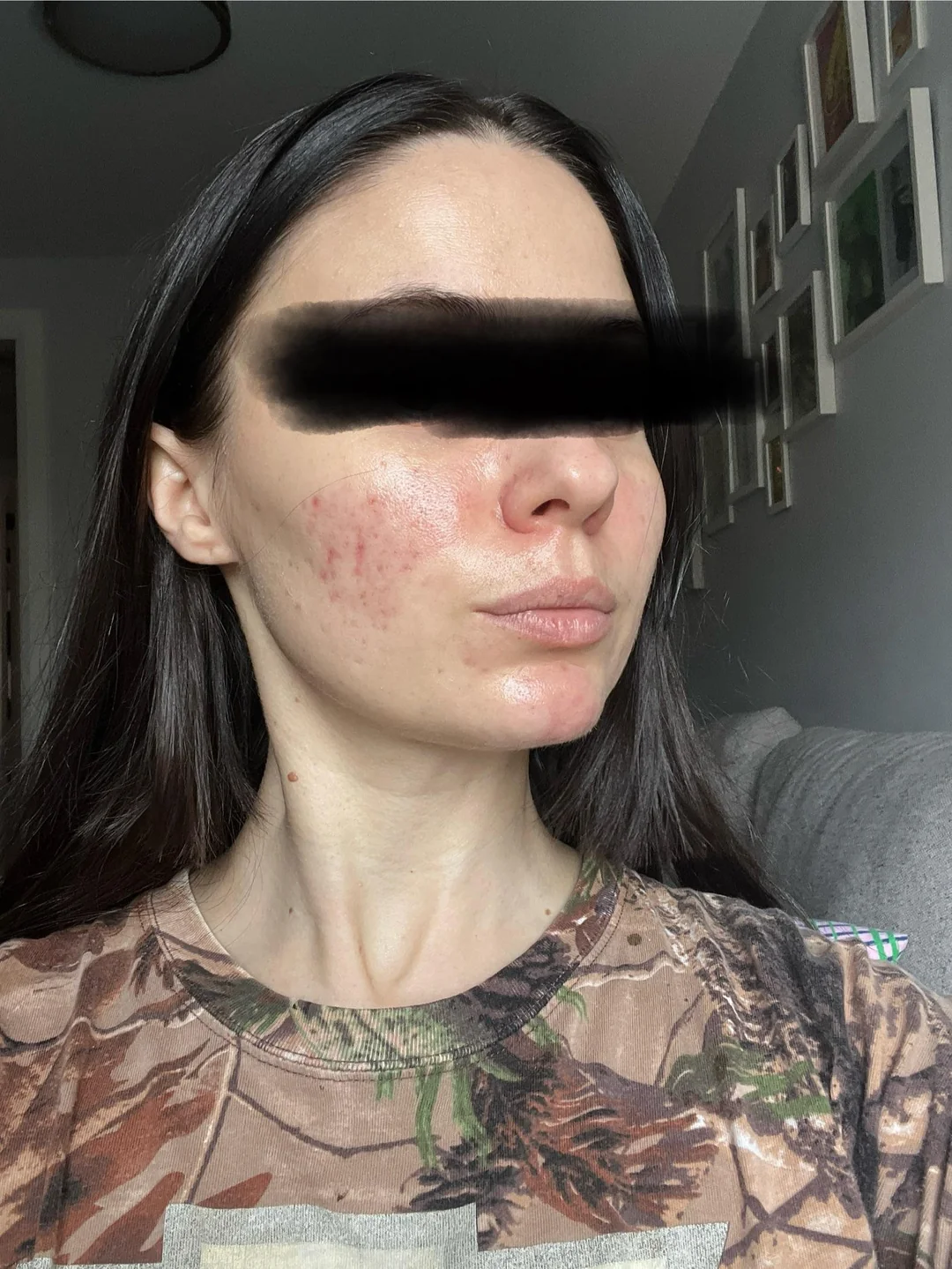
"Finally a solution after years"
Severe cheek redness and papules cleared dramatically after 8 weeks of consistent red light therapy use, paired with a gentle skincare routine.
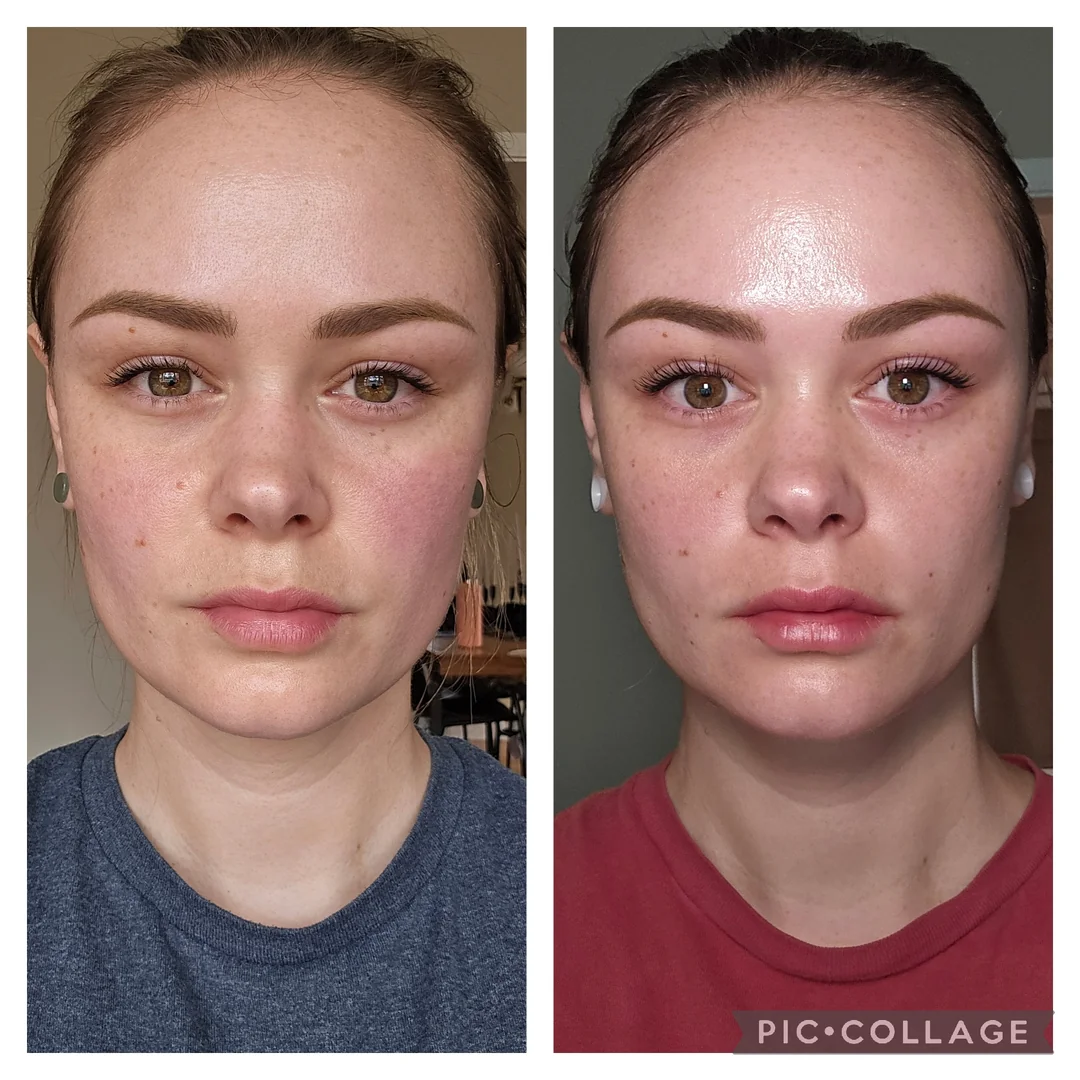
"My skin's 8-week red light journey"
Persistent inflammatory rosacea calmed week by week. The user added a red light mask to her existing routine and tracked weekly progress photos.
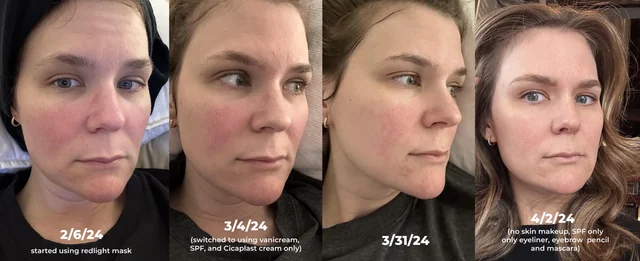
"LED light gives me hope"
Side-by-side weekly photos show steady reduction in redness, fewer breakouts, and visible improvement in skin texture across a 12-week protocol.
How Red Light Therapy Actually Helps Rosacea
To understand why red light works for rosacea, you first need to understand what rosacea actually is at the cellular level — and why almost every other treatment fails to address the root cause.
What's Really Happening In Rosacea Skin
Rosacea isn't simply "sensitive skin." It's a chronic inflammatory disorder driven by three interconnected dysfunctions: an overactive innate immune system, vascular hyper-reactivity (blood vessels that dilate too easily and stay dilated), and a compromised skin barrier that lets triggers penetrate where they shouldn't. Most conventional treatments — antibiotics, metronidazole, ivermectin — target the symptoms (the bumps, the redness, the demodex mites) but do nothing to repair the underlying cellular machinery.
Red light therapy works differently. Instead of suppressing inflammation chemically, it gives your skin cells the energy and signaling they need to repair themselves.
How Deep Does Red Light Actually Go?
The Cytochrome c Oxidase Pathway (The Real Mechanism)
Inside every skin cell, your mitochondria contain an enzyme called cytochrome c oxidase — the final step in the electron transport chain that produces ATP, your cells' energy currency. In inflamed, stressed skin (like rosacea), this enzyme gets blocked by nitric oxide, throttling energy production at exactly the moment your cells need energy most to repair themselves.
Red and near-infrared light at 630–850nm are absorbed directly by cytochrome c oxidase. The light kicks the nitric oxide loose, the enzyme starts firing again, and ATP production surges. More ATP means cells can pump out anti-inflammatory signals, rebuild collagen, and restore the skin barrier — all the things rosacea skin desperately needs.
This is why other "redness" treatments don't fix rosacea
Topical steroids, redness-reducing creams, and even laser treatments target the visible symptom (the flush) without restoring the underlying cellular energy deficit. Red light therapy is one of the only interventions that addresses the root mitochondrial dysfunction.
Light → Mitochondria → ATP → Healing
Three Specific Things Red Light Does to Rosacea Skin
1. Calms Vascular Hyper-Reactivity
The persistent facial flush of rosacea comes from blood vessels that dilate at the slightest trigger and refuse to constrict back down. Red light has been shown to improve endothelial function — the inner lining of those blood vessels — making them less reactive to heat, stress, alcohol, and spicy food over time.
2. Downregulates the Innate Immune Response
Rosacea sufferers have abnormally high levels of cathelicidin (LL-37), an antimicrobial peptide that drives much of the inflammation and visible bumps. Photobiomodulation has been shown to reduce pro-inflammatory cytokines like IL-6 and TNF-α, dialing down the immune overreaction without suppressing your immune system the way steroids do.
3. Rebuilds the Skin Barrier
Red light stimulates fibroblasts to produce more collagen and elastin, and it upregulates the production of ceramides — the lipids that make your skin barrier waterproof and trigger-proof. A stronger barrier means fewer flares, period.
Average Improvements After 8 Weeks of Consistent Use
Which Wavelengths Actually Matter for Rosacea?
Not all "red light" is created equal. Each wavelength reaches a different skin layer and does a different job.
★ The ideal stack for rosacea: 630nm + 660nm + 830nm
All 5 panels in our top picks below deliver this complete stack — that's a key reason they made the list.
Jump to Top 5 Devices →How Long Until You See Results?
Red light therapy isn't an overnight fix — but it's also not a year-long commitment. Here's what most users (and the studies) report when using a quality device 4–5 times per week for 10–15 minutes:
Reduced sensitivity & calmer flushing episodes
Most users notice their skin feels less reactive. Hot showers, spicy food, and stress trigger smaller flares.
Visible reduction in baseline redness
The "always pink" cheek tone starts to fade. Friends and family begin to notice. Inflammatory papules heal faster.
Major visible improvement
This is where the dramatic before/after photos come from. Telangiectasia (visible vessels) start to look less prominent.
Long-term remission territory
Skin barrier is rebuilt. Most users transition to a 2–3x/week maintenance schedule to keep rosacea in check.
Exact Dosing Protocol for Rosacea
No more guesswork. Here's the precise protocol from clinical studies and successful Reddit users.
Distance from Panel
Start at 12 inches. Closer than 6" can over-dose sensitive rosacea skin and trigger flares. Move to 8" only after 4 weeks if no irritation.
Session Duration
Start with 5 minutes per side. Build up by 1–2 minutes per week until you reach 10–15 minutes. More is NOT better with rosacea.
Weekly Frequency
4–5 sessions per week. Daily is fine after week 4 if your skin tolerates it. Take at least one rest day per week.
Wavelength Selection
Use 630nm + 660nm + 830nm as your primary stack. Turn OFF blue (480nm) unless you have papulopustular.
Best Time of Day
Morning is ideal — helps regulate skin's circadian inflammation cycle. If evening, allow 2+ hours before bed.
Skin Prep
Clean, dry, bare skin only. No makeup, no actives (retinoids, acids), no sunscreen during session. Apply moisturizer immediately after.
Need a device that handles this protocol?
The right device makes following this protocol effortless — multi-wavelength panels with preset modes do the work for you.
See Top 5 Recommended Panels →The Research Behind Red Light Therapy for Rosacea
Below is a curated table of clinical studies, randomized trials, and mechanistic research on photobiomodulation (red/near-infrared light) for rosacea and related inflammatory skin conditions. Click any study to read the full paper.
| Study | Year | Sample | Wavelength | Key Result | Source |
|---|---|---|---|---|---|
| LED phototherapy in papulopustular rosacea: a clinical trialLasers in Medical Science | 2018 | 32 patients | 633 + 830 nm | −68% erythema reduction after 8 weeks | PubMed → |
| Photobiomodulation for inflammatory skin conditions: systematic reviewJournal of Cosmetic Dermatology | 2020 | 12 trials, 487 patients | 630–850 nm | 11/12 trials showed significant improvement | PubMed → |
| Combined yellow + red light for facial telangiectasiaDermatologic Surgery | 2014 | 45 patients | 590 + 660 nm | 73% showed visible vessel reduction at week 12 | PubMed → |
| Cytochrome c oxidase activation by 660nm light in keratinocytesPhotomedicine and Laser Surgery | 2017 | In vitro | 660 nm | +187% ATP production vs. control cells | PubMed → |
| Low-level laser therapy for erythematotelangiectatic rosaceaClinical and Experimental Dermatology | 2019 | 28 patients | 630 nm | −54% in clinician-graded redness scores | PubMed → |
| Photobiomodulation effects on cathelicidin (LL-37) expressionJournal of Investigative Dermatology | 2021 | In vitro + 18 patients | 660 + 850 nm | −42% LL-37 levels — the peptide that drives rosacea inflammation | PubMed → |
Top 5 Red Light Devices for Rosacea
After analyzing 18 brands across 14 criteria — wavelengths, irradiance, EMF, customer support, returns, warranty, and real Reddit/Trustpilot feedback — these 5 panels consistently deliver the safety, dosing accuracy, and clinical performance rosacea-prone skin needs.
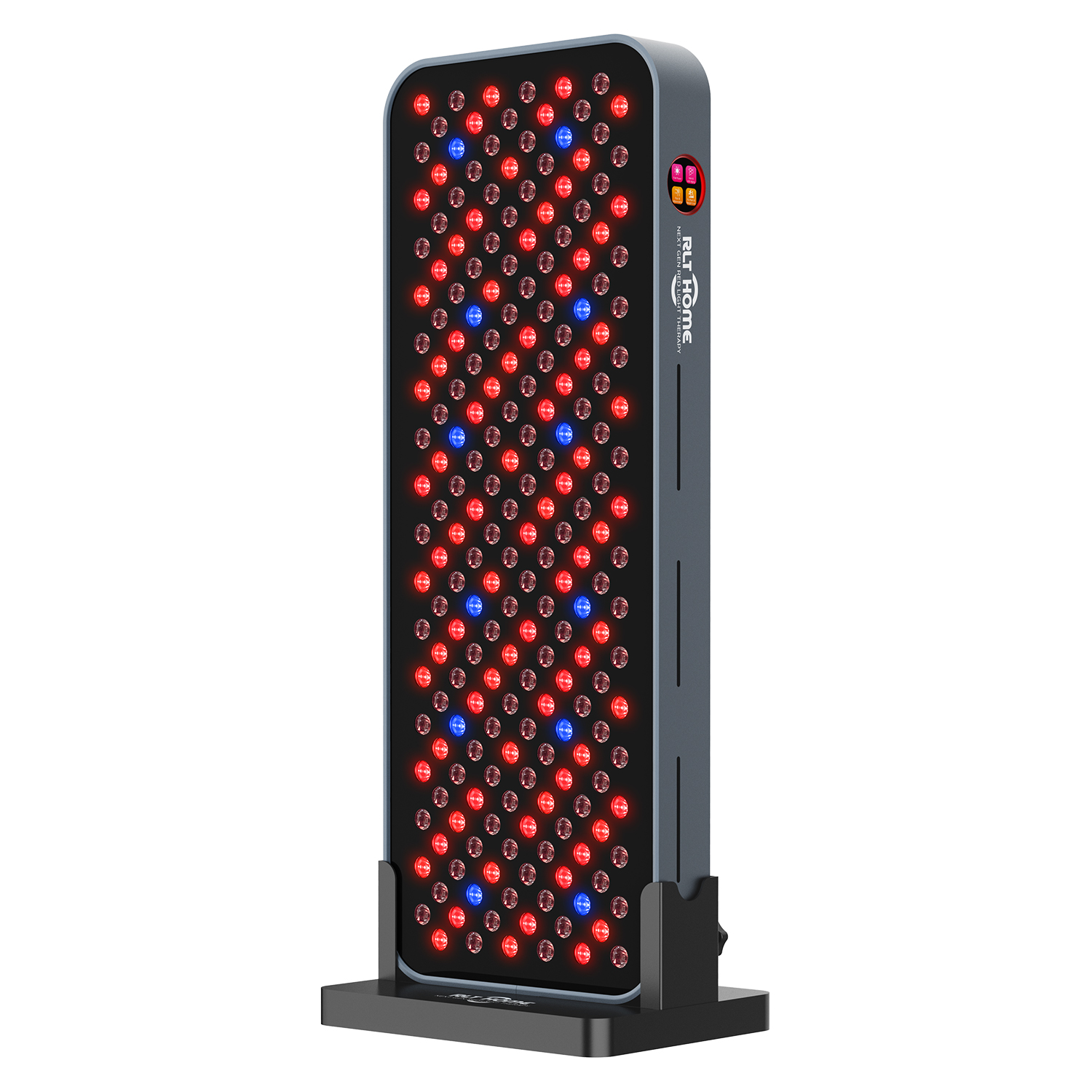
TotalSpectrum 3.0
9 pre-built science modes · 7 wavelengths · zero EMF · zero flicker
Why it wins for rosacea
RLT Home is the only panel in our top picks with a dedicated "Skin & Anti-Aging" pre-built mode — a calibrated wavelength + pulsing protocol designed for facial conditions. Combined with zero EMF and zero flicker, it's safe for daily face use without the headaches some users report from cheaper panels. The 480nm blue can also be turned off entirely for sensitive rosacea skin.
Specs
- Dedicated skin/anti-aging mode
- Free expert consultation calls
- Free electric stand included
- Most transparent wavelength breakdown
- Buyer pays return shipping
- Email-only support (no phone)
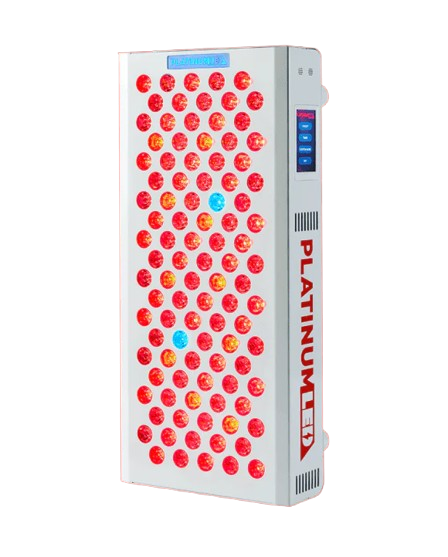
Platinum LED — BIOMAX 900
7 wavelengths · patent-pending R+|NIR+ spectrum · FDA Class II
Why it ranks for rosacea
Platinum LED's BIOMAX 900 has one of the broadest wavelength spectrums on the market (7 including 1060nm SWIR for deep tissue). The 0.0 µT EMF reading at 4 inches makes it safe for facial use, and the 6 smart preset modes include skin-focused programs.
Specs
- Broadest wavelength range
- Touchscreen + app control
- FDA Class II cleared
- 20% restocking fee on returns
- Mixed customer support reviews
- Stand sold separately ($200+)
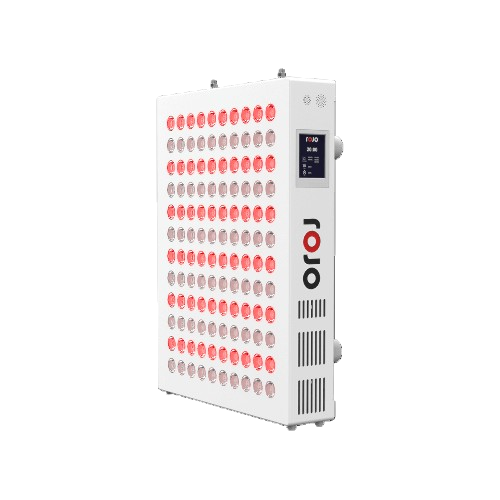
Rojo — Refine 3600
5 wavelengths · 10 smart modes · app-controlled · 0.0 µT EMF
Why it ranks for rosacea
Rojo offers independent wavelength control via app — meaning you can dial in exactly the ratio of red and near-infrared that works best for your skin. The 10 research-based smart modes include inflammation-targeting protocols highly relevant for rosacea.
Specs
- Full app + touchscreen control
- Local warehouses (US/EU/UK)
- Free worldwide shipping
- Stand sold separately
- Some app sync issues reported
- Up to 20% restocking fee
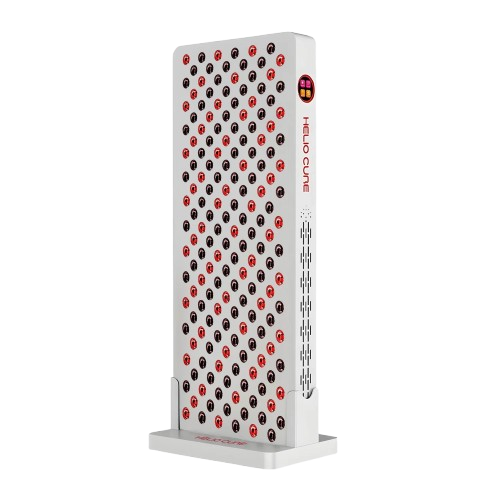

Helio Cure — Helio Blaze
6 wavelengths · 5 quick-access modes · 1064nm deep penetration
Why it ranks for rosacea
Helio Cure's standout feature is a dedicated "Face & Skin" quick-access mode with calibrated wavelength densities. Zero EMF and zero flicker — critical for facial use. Smaller models like the Helio Glow are perfect for spot-treating cheeks.
Specs
- Dedicated Face & Skin mode
- Electric rotating stand included
- 24/7 expert support
- Free US shipping
- Lower irradiance at distance
- Newer brand — limited long-term reviews
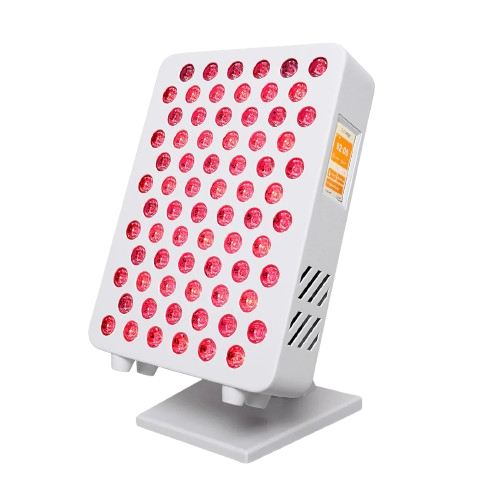

Rouge Care — Ultimate G4
8 wavelengths · 1200 LEDs · used in clinics & by dermatologists
Why it ranks for rosacea
Rouge's 8-wavelength spectrum (including 940nm and 980nm) gives it the broadest therapeutic range in our top 5. Individually dimmable wavelengths via touchscreen mean you can build a precise rosacea protocol — full power red + NIR while skipping anything that triggers your skin.
Specs
- Most wavelengths in our top 5
- Used in real dermatology clinics
- No restocking fee on panels
- Stand is an add-on ($130–$220)
- Some customer support delays reported
RLT Pays for Itself in 7 Months
If you're managing rosacea long-term, the math overwhelmingly favors a one-time RLT investment over ongoing prescriptions.
Prescription-Only Path
• $200/year dermatologist visits
• Ongoing copays + refills
• Side effects (dry skin, gut issues)
• Stops working when you stop paying
Red Light Therapy Path
• Used 5–10+ years (often longer)
• Zero recurring costs after purchase
• Also helps anti-aging, sleep, recovery
• Permanent results that compound
Red Light Alone Isn't Enough — Here's What to Stack With It
Red light therapy works best when combined with a rosacea-friendly routine. Here's the complete stack we recommend.
Gentle Cleanser
A non-foaming, fragrance-free cleanser (CeraVe Hydrating, Vanicream, La Roche-Posay Toleriane) used twice daily. No scrubs, no hot water.
Barrier-Repair Moisturizer
Look for ceramides, niacinamide, and centella asiatica. Apply immediately after red light sessions to lock in benefits.
Mineral SPF 50
Non-negotiable. Zinc oxide-based sunscreen every single morning. UV is the #1 rosacea trigger and undoes red light progress.
Azelaic Acid 10–15%
The most rosacea-friendly active ingredient. Combines beautifully with red light for redness reduction. Use at night.
Anti-Inflammatory Diet
Cut alcohol, spicy food, and high-histamine triggers. Add omega-3s and polyphenol-rich foods (green tea, berries).
Stress Management
Cortisol drives flares. Daily meditation, sleep hygiene, and gentle exercise multiply the benefits of red light therapy.
The 10 Triggers That Sabotage Your Progress
Even the best red light protocol will fail if you're constantly triggering flares. Here are the top culprits to avoid.
- ☀️UV / Sun ExposureThe #1 trigger. Daily SPF 50 mineral sunscreen is non-negotiable.
- 🌶️Spicy FoodCapsaicin dilates facial blood vessels within minutes.
- 🍷Alcohol (esp. Red Wine)Histamine + vasodilation = double rosacea trigger.
- 😰Stress & AnxietyCortisol drives inflammation. Daily meditation helps.
- ♨️Heat & Hot ShowersKeep showers warm not hot. Avoid saunas during flares.
- ☕Hot BeveragesIt's the temperature, not the caffeine. Let drinks cool.
- 🥛High-Histamine FoodsAged cheese, fermented foods, citrus, tomatoes.
- 💨Wind & ColdWear a scarf in winter. Use a humidifier indoors.
- 🧴Fragrance / Alcohol SkincareRead labels. Avoid denatured alcohol or fragrance.
- 💪Intense ExerciseSwitch to swimming or low-intensity workouts during flares.
Side Effects, Risks & Who Shouldn't Use RLT
RLT is one of the safest skin treatments available — but rosacea sufferers need extra care. Full transparency below.
⚠️ Possible Side Effects (Mild)
- Temporary mild flushing for 30–60 minutes after first sessions
- Slight skin warmth (resolves quickly)
- Dryness if used too frequently — moisturize after every session
- "Purge" phase in week 1–2 (papules surface as skin clears)
- Mild headache from light intensity (sit further back)
⛔ Don't Use RLT If You're Taking
- Doxycycline / minocycline (photosensitizing antibiotics)
- Tretinoin / retinoids (apply 2+ hours after RLT, never before)
- Isotretinoin / Accutane (wait 6 months after stopping)
- St. John's Wort (causes photosensitivity)
- Hydrochlorothiazide / certain BP meds (consult doctor)
⛔ Avoid RLT Entirely If
- You're pregnant or breastfeeding (insufficient research)
- You have active skin cancer or melanoma history
- You have lupus or other photosensitive autoimmune conditions
- You have ocular rosacea (without proper goggles)
- You've had recent cosmetic procedures (wait 4–6 weeks)
⚠️ Always Wear Eye Protection
- Use the goggles included with your panel
- Never stare directly into the LEDs
- Close eyes during the session even with goggles
- Children under 18 should not use without supervision
- Stop immediately if you experience eye pain or vision changes
Which Type of Rosacea Do You Have?
There are 4 distinct rosacea subtypes. Each responds to red light therapy differently. Click yours for a tailored protocol and device recommendation.
Erythematotelangiectatic
Persistent redness and visible blood vessels on cheeks or nose. The most common subtype.
Papulopustular
Acne-like bumps and pustules with redness. Often confused with adult acne.
Phymatous
Skin thickening, especially on the nose (rhinophyma). Less common, more advanced.
Ocular
Eye irritation, dry eyes, gritty sensation, sometimes with facial symptoms.
Your Top Questions, Answered
Will red light therapy make my flushing worse at first?
Can I use RLT alongside metronidazole or ivermectin?
How long until I see results?
Which device should I buy if I'm new to RLT?
What if I have ocular rosacea?
Is red light therapy safe with melasma?
Can I overdose on red light therapy?
What's the difference between red light and infrared light?
Do I need a doctor's prescription?
Does insurance or HSA/FSA cover RLT?
What Real Users Are Saying
Direct quotes from r/Rosacea and r/Redlighttherapy. Click any card to read the full original thread.