Red Light Therapy for Phymatous Rosacea
The most advanced and least common rosacea subtype — characterized by progressive skin thickening, especially on the nose (rhinophyma). RLT can slow progression and reduce inflammation, but advanced cases require dermatological intervention.
Quick Facts
Understanding Phymatous Rosacea
Phymatous rosacea is the rarest and most visually dramatic rosacea subtype, affecting roughly 5% of rosacea sufferers — overwhelmingly men. The hallmark feature is progressive thickening of the skin, most commonly affecting the nose (called rhinophyma), but it can also affect the chin (gnathophyma), forehead (metophyma), ears (otophyma), and eyelids (blepharophyma).
Phymatous changes develop slowly over years, often starting as untreated ETR or PPR that progressively worsens. The skin thickens due to sebaceous gland enlargement and connective tissue fibrosis. Early-stage phymatous responds well to RLT and topicals; advanced cases require surgical intervention (CO2 laser, electrosurgery, or dermabrasion) to remove excess tissue.
Common Symptoms
⚠️ When to See a Dermatologist FIRST
Unlike ETR or PPR, phymatous rosacea often requires professional intervention. Consult a board-certified dermatologist before starting RLT if you have:
- Significant nasal enlargement or visible deformity
- Skin thickening that's progressed in the last 6 months
- Difficulty breathing through your nose (advanced rhinophyma)
- Skin texture changes that don't respond to topical treatments
- Any rapid changes — to rule out skin cancers (basal cell carcinoma can mimic rhinophyma)
RLT is most effective for early-stage phymatous — to slow or halt progression. For established tissue thickening, RLT works best as a complement to dermatological procedures, not a replacement.
How Red Light Therapy Helps Phymatous Rosacea
Phymatous changes are driven by chronic deep-tissue inflammation, sebaceous gland enlargement, and fibroblast overactivity producing excess collagen. Red light therapy — particularly at deeper wavelengths — addresses all three.
Deep Tissue Inflammation Reduction
Phymatous inflammation occurs deeper in the dermis than ETR or PPR. Wavelengths in the 830–1064nm range penetrate 8–15mm to reach this deeper inflammation, downregulating cytokines that drive fibrotic changes.
Sebaceous Gland Modulation
Red light at 660nm has been shown to normalize sebaceous gland activity. While it doesn't shrink already-enlarged glands, it can prevent further enlargement and reduce excess sebum production that contributes to phymatous progression.
Fibroblast Regulation
Phymatous involves abnormal fibroblast activity producing excess collagen (fibrosis). Photobiomodulation has a paradoxical effect — it stimulates collagen production in damaged skin but normalizes overactive fibroblasts in fibrotic tissue, helping balance the dysregulated remodeling.
Slows Disease Progression
The most important benefit for phymatous patients: consistent RLT use can significantly slow or halt progression of new tissue thickening. While it won't reverse existing rhinophyma, it can prevent the years-long worsening that often leads to surgical intervention.
Exact Dosing Protocol for Phymatous
Phymatous needs deeper, longer treatments than ETR or PPR. The skin can tolerate higher doses since it's thickened.
Closer for Deep Penetration
Phymatous skin is thicker and tolerates closer distances. Start at 8" — you need the intensity for deep wavelength penetration.
Longest of All Subtypes
Deep tissue treatment requires longer sessions. 15 min minimum, 20 min for affected areas like the nose.
Consistency Is Critical
Phymatous benefits from daily treatment. The slow nature of phymatous changes means you need maximum cumulative dose.
Deep Penetration Required
Surface red light (630nm) is less important. Focus on NIR and SWIR wavelengths that reach the dermal layers where phymatous changes occur.
The Long Game
Phymatous is the slowest-responding subtype. Plan for 6 months minimum before evaluating results. This is not a quick-fix subtype.
RLT Alone Often Isn't Enough
Best results combine RLT with isotretinoin (low-dose), oral doxycycline, or topical metronidazole under dermatologist supervision.
Phymatous Treatment Timeline
Phymatous is the slowest-responding rosacea subtype. Set realistic expectations — you're treating a years-long fibrotic process.
Inflammation reduction
Background redness reduces. Skin feels less inflamed. No visible structural changes yet — this is too early.
Texture improvement begins
"Orange peel" texture starts subtly improving. Skin feels softer to touch. Pores appear slightly less prominent.
Progression halt
The most important milestone: phymatous worsening stops. New tissue thickening doesn't occur. This alone is a significant clinical win.
Possible mild reversal
Some users report subtle reduction in nasal thickness for early-stage rhinophyma. Established cases hold steady but don't regress significantly.
Long-term maintenance
Continue daily sessions to prevent any recurrence of progressive changes. Phymatous requires lifelong management.
Top 5 Red Light Devices for Phymatous Rosacea
Phymatous requires devices with deep-penetrating wavelengths (1064nm SWIR) — which significantly narrows the field. Here's how the top 5 stack up:
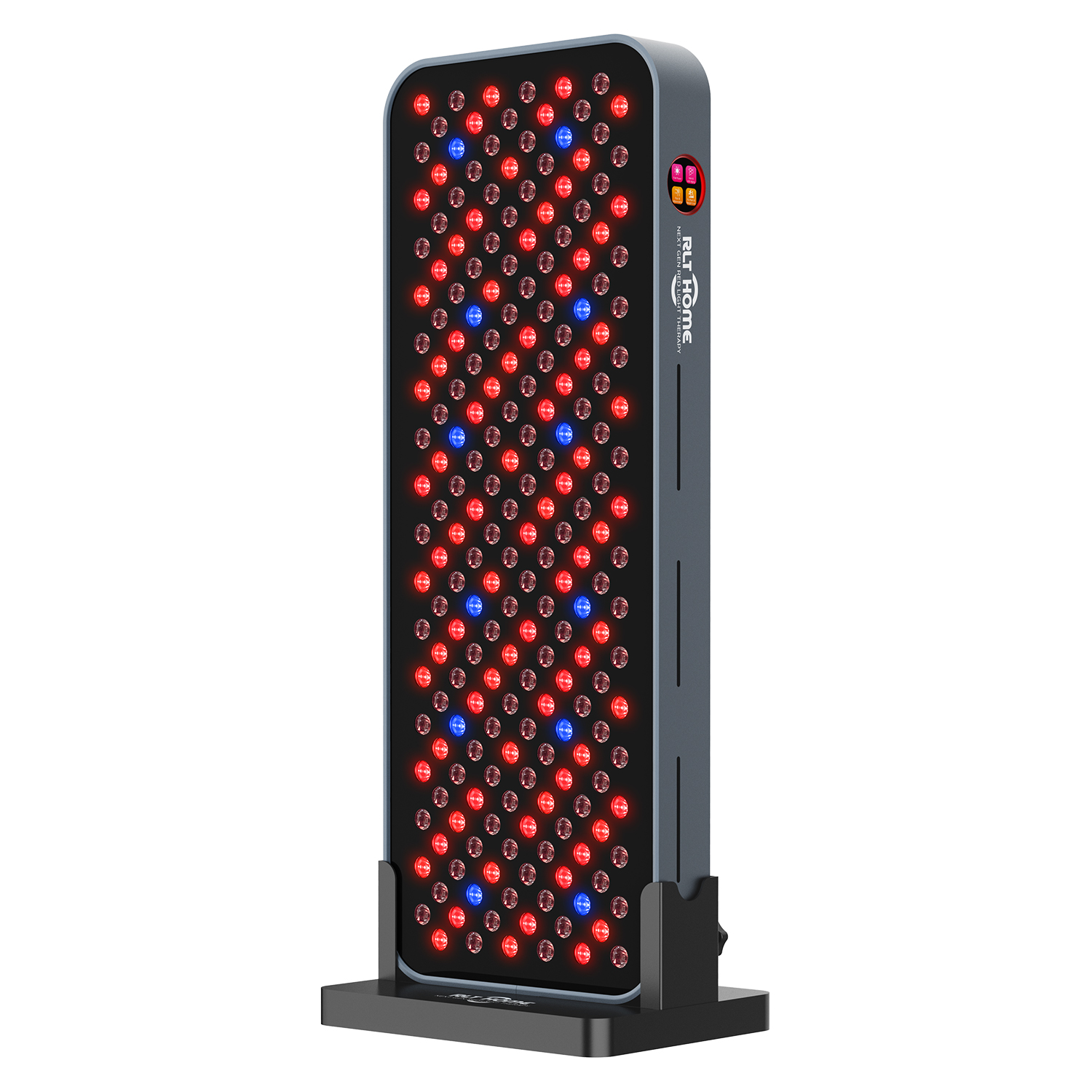
TotalSpectrum 3.0
7 wavelengths · deep 1064nm SWIR · skin remodeling mode
Why it's #1 for Phymatous specifically
Phymatous rosacea involves deep tissue thickening that requires wavelengths reaching the dermis. RLT Home is the only top-5 panel with 1064nm SWIR (short-wave infrared) which penetrates 15mm deep — exactly where phymatous changes occur. The customizable wavelengths let you focus on 830nm and 1064nm for maximum tissue penetration.
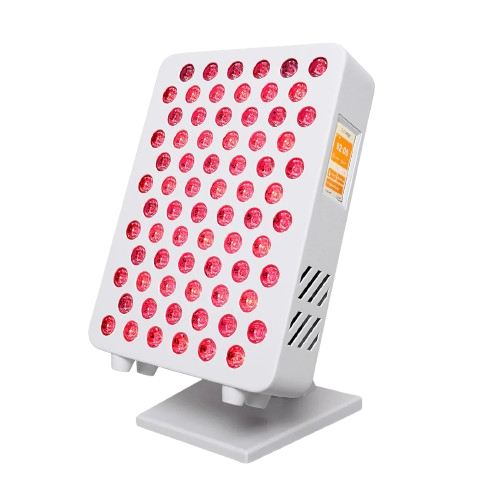

Rouge Care — Ultimate G4
8 wavelengths including 940 + 980 + 1060nm · clinic-grade
Why it ranks #2 for Phymatous
Rouge's 8-wavelength spectrum includes deep penetrating 940nm, 980nm, and 1060nm — the wavelengths most relevant for phymatous tissue remodeling. Used in dermatology clinics specifically for advanced inflammatory skin conditions.
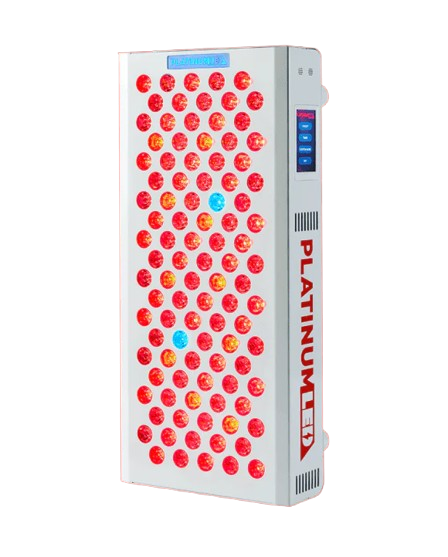
Platinum LED — BIOMAX 900
1060nm SWIR included · FDA Class II
Why it ranks for Phymatous
Includes 1060nm for deep tissue penetration. The FDA Class II clearance and clinical-grade construction make it suitable for the longer treatment durations phymatous requires.
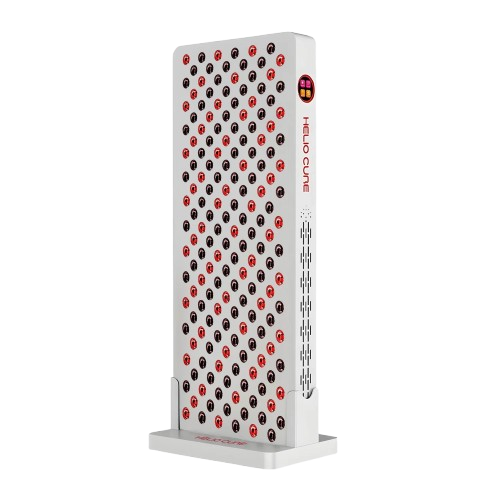

Helio Cure — Helio Blaze
1064nm deep penetration · zero EMF
Why it ranks for Phymatous
Includes 1064nm for deep tissue work. Lower irradiance means longer sessions are needed (15-20 min) but it's gentle for sensitive areas like the nose during phymatous treatment.
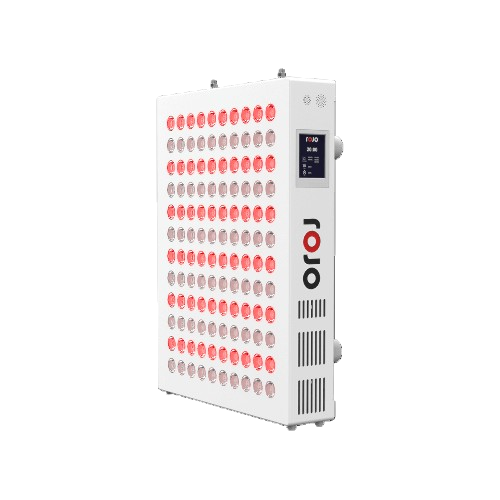
Rojo — Refine 3600
5 wavelengths · max 850nm · no SWIR
Why it ranks for Phymatous
Lacks the deeper 1060nm wavelength — meaning it can address the inflammation component but not the tissue thickening as effectively. Better suited for early phymatous before significant tissue changes occur.
Common Questions About RLT for Phymatous
Can red light therapy reverse rhinophyma?
I'm getting CO2 laser treatment — should I still use RLT?
How does phymatous differ from skin cancer?
Why does phymatous mostly affect men?
Can I use RLT alongside isotretinoin (Accutane)?
How long until I should expect to see ANY improvement?
What if my insurance won't cover dermatology visits?
Ready to Slow Your Phymatous Progression?
Read our complete evidence-based rosacea guide and find the deep-penetrating device that fits your treatment plan.
See Top 5 Devices →